
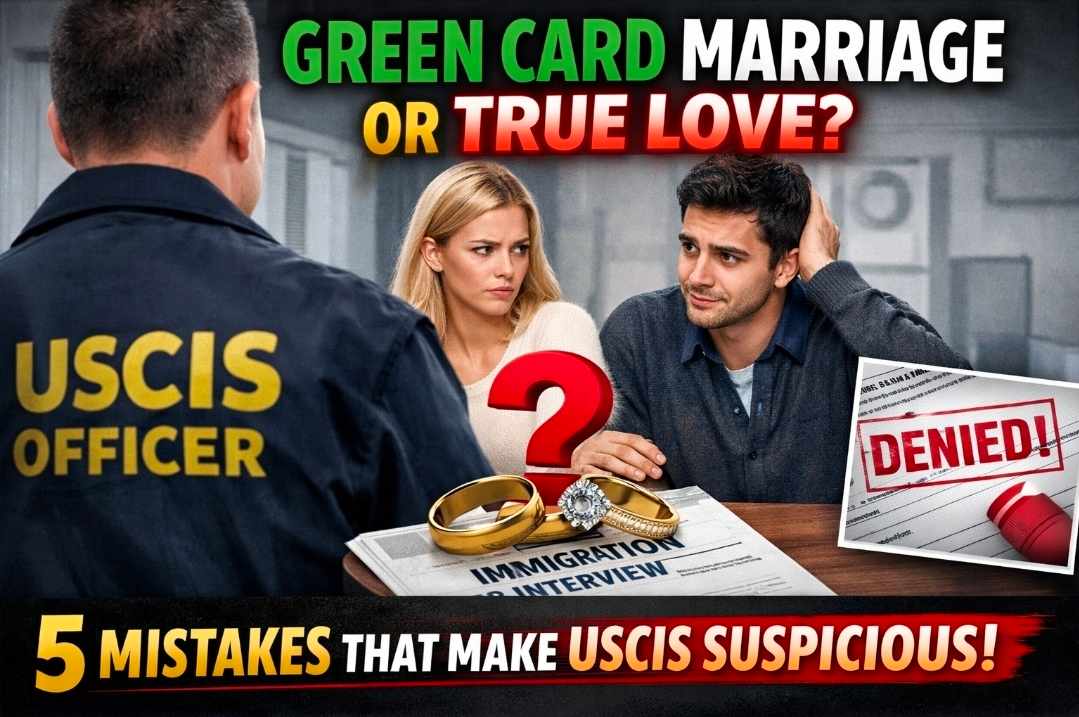
Applying for a US Marriage Visa (CR1/IR1) is one of the most exciting yet stressful journeys a couple can undertake. While you know your love is genuine, USCIS (U.S. Citizenship and Immigration Services) starts with a blank slate. They don’t know your story—they only know what is on your paperwork.
Every year, thousands of bona fide couples face grueling interviews, delays, or even denials simply because their applications inadvertently raised “red flags.” To immigration officers, a lack of preparation can easily look like a sham marriage for a green card.
Are you accidentally triggering the USCIS fraud radar? Here are the top 5 mistakes that make immigration officers suspect your relationship.
1. Commingling of Finances? Non-Existent.
To USCIS, love is beautiful, but shared financial liability is proof. If you and your spouse have been married for months but still maintain completely separate financial lives, it raises immediate suspicion.
The Red Flag: Submitting a Form I-130 petition with zero joint bank accounts, no shared credit cards, or no joint lease agreements.
Actionable Tip: Open a joint bank account as soon as possible. Use it for active, everyday expenses like rent, groceries, and utilities. A stagnant account with a one-time deposit looks suspicious.
2. The “Too Perfect” Instagram-Only Photo Album
Many couples think sending 50 photos of themselves smiling in front of famous landmarks is the ultimate proof of love. However, USCIS officers are trained to spot curated, staged timelines.
The Red Flag: If all your photos feature just the two of you, wearing different outfits in the same location, or completely lacking family and friends, it looks like a weekend photo shoot designed to fool immigration.
Real relationships are messy and social. Include candid photos, pictures with in-laws, and screenshots of casual group video calls. Show that your families know about the marriage.
3. Major Timeline Gaps and Communication Dark Zones
Long-distance relationships are tough, but they leave a digital footprint. If you claim to be deeply in love but have months-long gaps in your chat logs, text history, or call records, the officer will query your bond.
The Red Flag: Filing a CR1 visa application when you have only met in person once for a few days before getting married, followed by minimal digital communication.
Consistently print out a diversified log of your communication—WhatsApp chat exports, call histories, and flight itineraries showing regular visits.
4. Failing to Prep for the “Basic” Discrepancies
During the NVC or Embassy interview phase, you and your spouse might be questioned separately if suspicion is high. You don’t need to know how many teeth your partner has, but contradicting each other on basic lifestyle facts is a fast track to a Notice of Intent to Deny (NOID).
The Red Flag: Mismatched answers about how you met, who proposed, what side of the bed your spouse sleeps on, or what you did for your last birthday.
Warning: Nervousness is natural, but absolute ignorance about your spouse’s daily routine, religious practices, or immediate family members triggers a major fraud investigation.
5. Inconsistent Tax Returns and Address Records
USCIS coordinates heavily with the IRS and other government agencies. If your marriage certificate says you live together, but the US citizen sponsor’s tax return lists them as “Single” or uses an old address, the paperwork contradicts your narrative.
The Red Flag: Filing taxes as “Single” after your legal marriage date to get a better tax bracket, or maintaining separate official driver’s license addresses without a valid explanation.